

 Uncategorized
The Okavango Delta Explained: Africa’s Last Great Wilderness and When to Visit
The Okavango Delta Explained: Africa’s Last Great Wilderness and When to Visit
There are places in Africa that stop you in your tracks. Places where the scale, the silence, and the sheer improbable beauty of the natural world make you recalibrate everything you thought you knew about this planet. The Okavango Delta is one of those places.
It is also one of the most misunderstood destinations in African travel. People hear ‘Botswana’ and think expensive. They hear ‘delta’ and picture swamps. They see photographs of mokoros gliding through papyrus channels and assume it is just a boat trip with some birds. None of that captures what the Okavango actually is.
The Okavango Delta is a UNESCO World Heritage Site, one of the Seven Natural Wonders of Africa, and the largest inland delta in the world. It is a place where a river from Angola floods into the Kalahari Desert and creates, seasonally, a wilderness of roughly 15,000 square kilometres teeming with wildlife, waterways, and a fragile, extraordinary ecosystem found nowhere else on earth.
This guide explains everything you need to know about the Okavango Delta: what it is, how it works, what you can do there, what wildlife you can expect, and most importantly, when to go for the experience that suits you best.
Thinking about visiting the Okavango Delta? Talk to the Maudie Safaris team. We have spent considerable time in the delta and can help you plan a trip that makes the most of this remarkable place.
What Is the Okavango Delta?
The Okavango Delta is one of the world’s great geographical anomalies. Most rivers flow to the sea. The Okavango does not. It rises in the highlands of Angola, flows southeast through Namibia’s Caprivi Strip, and then, rather than continuing to the ocean, fans out across the flat Kalahari sandveld of northern Botswana and gradually evaporates.
The result is a vast, shifting inland delta, a mosaic of permanent water channels, seasonal floodplains, islands, lagoons, reed beds, and papyrus swamps that changes its shape and character with each annual flood cycle. At peak flood the delta covers roughly 15,000 square kilometres. In the dry season, when the water recedes, it contracts to around 9,000 square kilometres of permanent water and wetland.
What makes the delta extraordinary is what this water does in the middle of one of Africa’s driest environments. The Kalahari Desert stretches across most of Botswana, and without the Okavango it would be largely inhospitable to large wildlife. But the annual flood creates a lifeline, drawing wildlife from vast surrounding distances and supporting concentrations of animals that have to be seen to be fully believed.
In 2014, the Okavango Delta was inscribed as a UNESCO World Heritage Site, recognised for its outstanding universal value as a large, intact ecosystem and one of the last remaining wildernesses in sub-Saharan Africa. That recognition was long overdue.
Understanding the Flood Cycle: How the Delta Works
The single most important thing to understand about the Okavango Delta is that it is driven by a flood that does not behave the way most visitors expect. The flooding is not caused by local rainfall. It is caused by rains that fall in the Angolan highlands, roughly 1,000 kilometres away, between November and March.
That floodwater travels slowly south and southeast along the Okavango River, eventually reaching the delta somewhere between April and June. The peak flood typically arrives between July and August, which is also Botswana’s dry season. So the delta is at its fullest precisely when the surrounding landscape is at its driest. This counterintuitive timing is part of what makes the Okavango such a remarkable wildlife magnet.
November to March: Rains fall in Angola. Delta is at its lowest locally. Some areas dry and accessible on foot.
April to June: Floodwater begins arriving. Waterways fill. Water activities become increasingly possible.
July to August: Peak flood. Maximum water coverage. Mokoro and boat safaris at their best.
September to October: Waters begin to recede. Wildlife concentrates on remaining floodplains.
October to November: Delta at its lowest. Dry-land game viewing excellent as animals crowd water sources.
This cycle creates two completely different but equally extraordinary versions of the Okavango experience. The flooded delta, from around June to September, is a water wilderness where mokoros glide silently through papyrus channels and the landscape looks like something from a different planet. The dry season delta, from around October to December, is a more conventional but no less spectacular safari environment where wildlife concentrates in extraordinary densities around the remaining water.
Neither version is better than the other. They are simply different. The right time to visit depends on which version of the delta appeals most to you, which we will explore in detail later in this guide.
Where Is the Okavango Delta and How Do You Get There?
The Okavango Delta sits in the far north of Botswana, in the Ngamiland region. It is bounded to the east by the Moremi Game Reserve and shares wildlife corridors with Chobe National Park to the northeast, creating one of Africa’s largest and most intact transfrontier conservation areas.
The gateway town for the Okavango Delta is Maun, a small, dusty town that punches well above its weight in terms of safari infrastructure. Most international visitors fly into Maun via Johannesburg (the most common connection), after which they transfer by small bush plane or light aircraft to their lodge or camp within the delta.
Getting around the delta
The Okavango Delta is not a road-based destination. During the flood season, much of the delta is accessible only by water or by air. Small bush planes flying between airstrips serve most of the major camps, and light aircraft transfers between lodges are a standard part of the delta safari experience. This is part of the appeal — there is something about arriving at a remote camp by bush plane that sets the tone for the adventure ahead.
Some camps on the eastern fringes of the delta, particularly in and around Moremi Game Reserve, are accessible by 4WD vehicle during the dry season. These areas offer a more conventional game drive experience combined with water-based activities, and tend to be somewhat more affordable than the deep-delta camps that are exclusively fly-in.
The Different Areas of the Okavango Delta
The Okavango Delta is not a single, uniform environment. It is a patchwork of different landscapes and ecosystems, and different areas offer quite different experiences. Understanding the main zones helps you choose the right part of the delta for your trip.
The Permanent Delta (Deep Delta)
The permanent delta is the inner core of the system, where water is present year-round regardless of flood levels. This is the most remote and most exclusive part of the Okavango, accessible only by small aircraft. Camps here sit on islands surrounded by water channels, papyrus swamps, and open lagoons. Activities are almost entirely water-based: mokoro excursions, motorboat trips, and fishing.
The permanent delta is where you come for absolute remoteness, extraordinary birding, and an experience that feels genuinely unlike anywhere else in Africa. Wildlife density is somewhat lower here than in the drier eastern areas during the game-viewing season, but what it lacks in big game concentration it more than compensates for in atmosphere, beauty, and the sheer sense of being somewhere wild and ancient.
Lodges in the deep delta tend to sit in the NG (National Geographic) concessions, privately managed wildlife areas that cap visitor numbers and ensure an exclusive experience. These are typically the most expensive camps in the delta.
The Seasonal Delta and Moremi Game Reserve
The eastern fringes of the delta, where the permanent water meets the seasonal floodplains, and the adjacent Moremi Game Reserve offer what most visitors consider the ideal combination of water activities and big game viewing.
Moremi covers roughly a third of the Okavango Delta and is one of Africa’s finest wildlife reserves. Chief’s Island, the largest island in the delta and the heart of Moremi, supports exceptional concentrations of lion, leopard, wild dog, elephant, and buffalo alongside the full complement of water-associated species. Camps in and around Moremi can offer both land-based game drives and water-based activities, giving you the best of both worlds.
This area is accessible by road from Maun during the dry season, which makes some camps here more affordable than the exclusively fly-in deep-delta options. It is the part of the Okavango we most often recommend to first-time visitors to the delta.
The Khwai and Linyanti Areas
To the north and east of Moremi, the Khwai community concession and the Linyanti wetlands offer outstanding game viewing in a slightly different setting. Khwai is managed by the local community and is renowned for exceptional wildlife sightings, particularly lion, leopard, and wild dog. It has a different character from the deeper delta, drier and more open in places, but with excellent water-based access during the flood.
The Linyanti wetlands, further north and bordering the Chobe district, are particularly famous for their elephant populations and for some of the best wild dog sightings in Botswana. Camps here tend to be intimate and exclusive, with a combination of land and water activities.
Wildlife of the Okavango Delta
The Okavango Delta supports one of Africa’s most diverse and most concentrated wildlife communities. The combination of permanent water, seasonal flood, dry woodland, open floodplain, and dense riverine forest creates a range of habitats that supports an extraordinary variety of species.
Here are some of the key species you can expect to encounter and what you should know about finding them.
| Species | What to know |
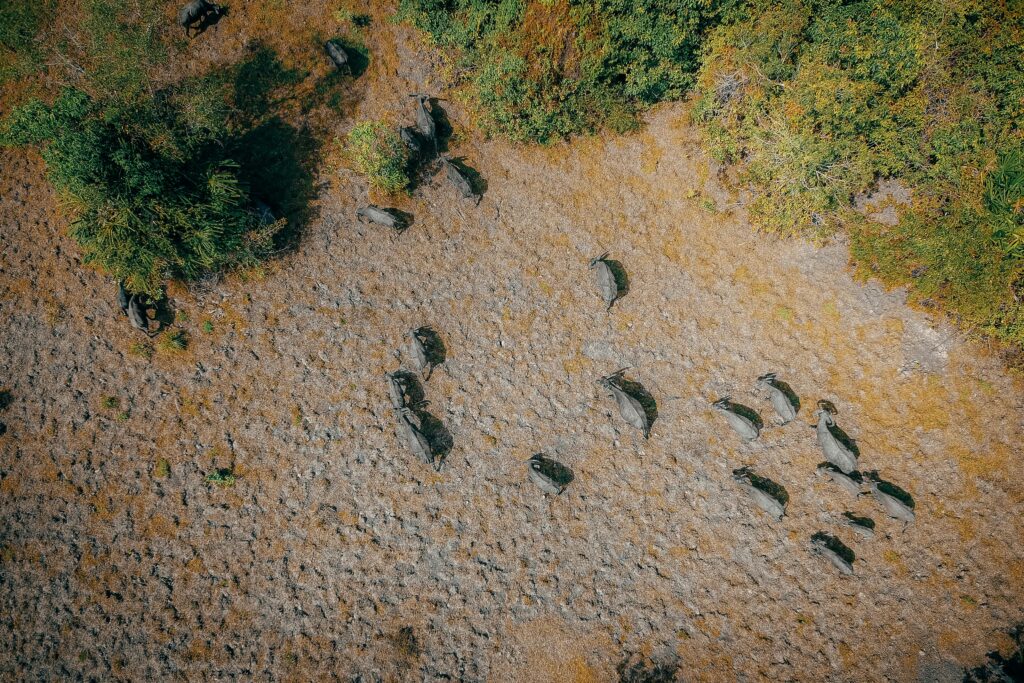
| African elephant | One of the highest densities anywhere in Africa. Herds of 50 or more are common during the dry season. |
| Lion | Resident prides throughout the delta and in Moremi Game Reserve. Reliable year-round. |
| Leopard | Excellent sightings, particularly around Moremi. Chief’s Island is one of Africa’s best spots. |
| African wild dog | The Okavango is one of the most important remaining strongholds for wild dog in Africa. |
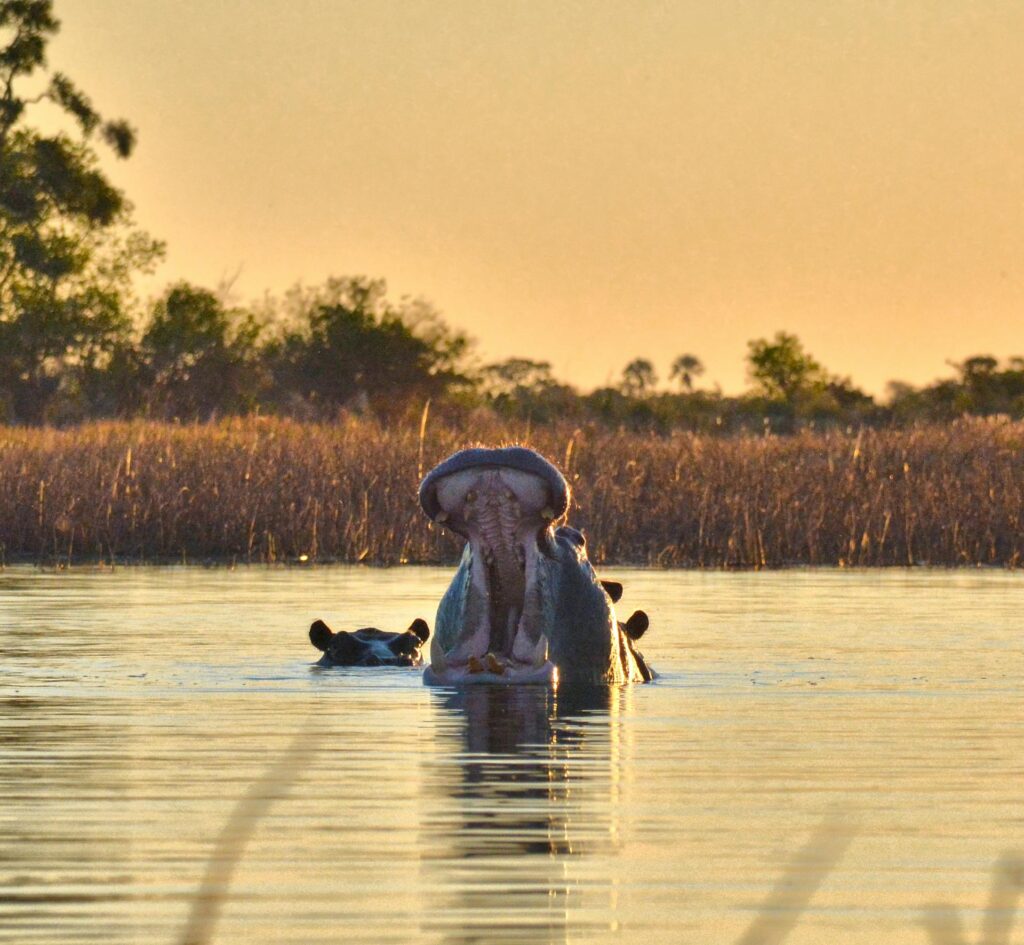
| Hippo | Enormous resident populations in the waterways. Hard to miss on any water-based activity. |
| Buffalo | Large herds throughout the dry season when the floodplains are accessible. |
| Cheetah | Present but less common than in open savannah ecosystems. More reliably seen on the drier eastern fringes. |
| Sitatunga | A semi-aquatic antelope found almost exclusively in papyrus and reed beds. The delta is one of very few places to see it. |
| Red lechwe | Thousands of red lechwe splash through the shallows during the flood. One of the delta’s iconic wildlife images. |
| African fish eagle | The call of the fish eagle is the sound of the Okavango. Heard and seen constantly near open water. |
| Pel’s fishing owl | One of Africa’s most sought-after birds. The delta’s riverine forests are among the best places in Africa to find it. |
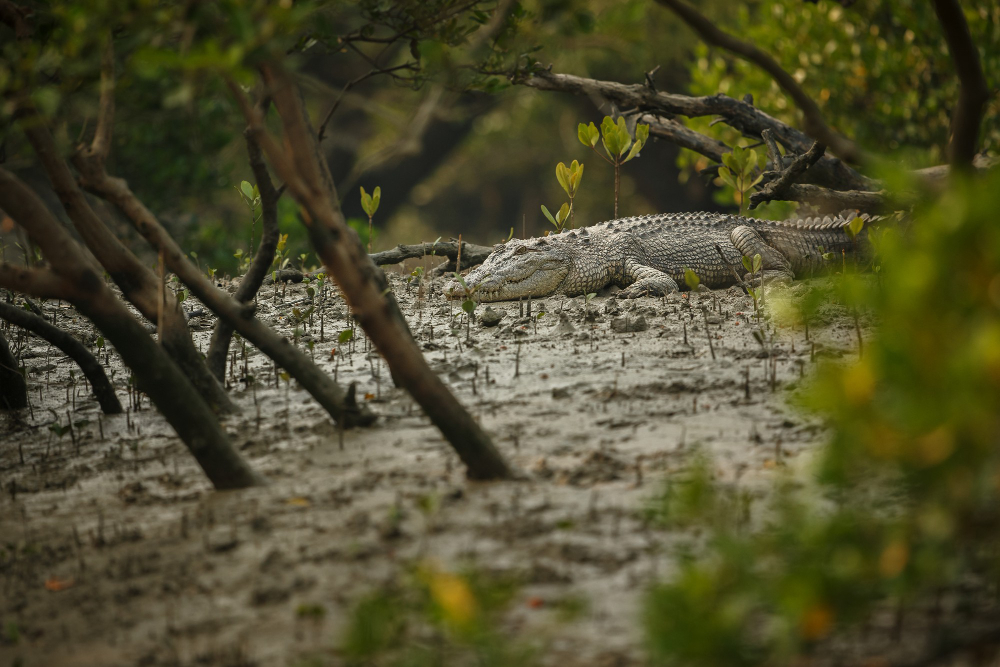
| Crocodile | Large Nile crocodiles are present throughout the waterways. Treated with great respect on water activities. |
Birding in the Okavango Delta
The Okavango Delta is one of Africa’s premier birding destinations and is included on almost every serious birder’s African tick list. Over 500 species have been recorded in the delta ecosystem, and the combination of aquatic, woodland, and open grassland habitats means that variety is exceptional regardless of when you visit.
Herons, egrets, storks, ibis, kingfishers, and jacanas are omnipresent on the waterways. The open floodplains support wattled cranes, secretarybirds, and a range of raptors. The riverine woodlands hold species like the gorgeous woodland kingfisher, African pygmy kingfisher, and the extraordinary Böhm’s spinetail. And for those willing to go out at night, the delta’s owls and nightjars are among the most diverse in Africa.
Pel’s fishing owl deserves a special mention. This large, rufous owl haunts the dense riverine forest along permanent water channels and is one of the most sought-after birds in Africa. A combination of its secretive habits and specific habitat requirements makes it genuinely difficult to find, but the Okavango’s permanent delta is one of the most reliable places in Africa to try.
What Can You Do in the Okavango Delta?
Part of what makes the Okavango Delta special is the sheer variety of ways you can experience it. Most good delta camps offer a combination of activities, and the best itineraries mix land and water experiences to give you a complete sense of the ecosystem.
Mokoro Excursions
The mokoro is a traditional dugout canoe that has been used by the people of the Okavango for centuries. Poled silently through shallow channels and lagoons by a local guide standing at the stern, it is one of the most quietly magical experiences in African travel.
The silence is the point. You move through the water at the pace of the current, close enough to the surface to see lily pads, reed frogs, and water monitors at eye level. Sitatunga antelope wade through the shallows ahead of you. Fish eagles call overhead. The papyrus closes around the channel and suddenly you are utterly, completely in the middle of something ancient and unchanged.
Mokoro excursions are best during the flood season, roughly May to September, when water levels are high enough for good channel navigation. During low water periods they are still possible in the permanent delta but are less extensive. Most camps offer both morning and afternoon mokoro excursions, and some include night mokoro trips which offer a completely different, equally extraordinary experience.
Motorboat and Speedboat Safaris
Where mokoro excursions offer intimacy and silence, motorboat safaris offer range and flexibility. A good motorboat guide can cover large areas of open lagoon and channel in a morning, giving you access to wildlife and birding that would take hours by mokoro.
Boat safaris are particularly good for hippo viewing (you cover enough water to find multiple pods), birding (the range allows you to move between different habitats quickly), and for experiencing the delta’s landscape in a more panoramic way. Sunset boat trips on open lagoons, with hippos grunting in the distance and the sky turning every shade of orange and pink, are among the Okavango’s most memorable experiences.
Game Drives
In the drier areas of the delta, particularly around Moremi Game Reserve, Khwai, and the Linyanti, open-vehicle game drives are a central part of the safari experience. The delta’s dry season game viewing, from around August to October as waters recede, is genuinely exceptional. Wildlife concentrates around the remaining water sources and the open floodplains, and the variety and density of species is comparable to the best parks in East Africa.
Most dry-land camps offer both morning and late-afternoon or evening game drives. Night drives, where permitted, dramatically expand the range of species you can encounter, from the bush-baby peering from a fork in a leadwood tree to the hyena clan returning from a hunt.
Walking Safaris
Walking safaris in the Okavango Delta are among the most exhilarating experiences the region offers. Moving through the bush on foot, accompanied by an experienced guide and an armed scout, gives you a completely different relationship with the landscape and the wildlife. You notice things you would drive straight past: the tracks of a leopard from the previous night, the tiny dung beetle rolling its ball across the path, the way the ground tells the story of everything that has happened in the last twenty-four hours.
Walking safaris in the delta are best done in the drier months when the terrain is accessible on foot and wildlife is concentrated in predictable areas. The experience requires a reasonable level of fitness and a willingness to move quietly and follow your guide’s instructions without question. The reward is a sense of genuine connection with the bush that no vehicle-based experience can fully replicate.
Fishing
The Okavango Delta is one of Africa’s great freshwater fishing destinations. The delta’s waterways are home to tigerfish, bream, catfish, and a range of other species, and the combination of spectacular scenery and productive fishing makes it a genuine draw for anglers.
Tigerfish, the delta’s most prized freshwater sport fish, are aggressive, acrobatic fighters that test even experienced anglers. The best tigerfish season is generally in the warmer months between October and March when the fish are most active. Bream fishing is good year-round. Most camps that offer fishing can cater to complete beginners as well as experienced anglers.
When to Visit the Okavango Delta: A Month-by-Month Guide
Timing your Okavango Delta trip is probably the most important decision you will make in the planning process. Unlike many African safari destinations where there is a clear ‘best’ time, the delta offers genuinely different but equally valid experiences across most of the year. The right time depends entirely on what you want.
| Jan | Feb | Mar | Apr | May | Jun | Jul | Aug | Sep | Oct | Nov | Dec | |
| Flood level | Low | Low | Rising | Rising | High | High | High | Peak | High | Falling | Low | Low |
| Game viewing | Good | Good | Good | Good | V.Good | V.Good | Excl. | Excl. | Excl. | V.Good | Good | Good |
| Mokoro / boat | Good | Good | Good | Good | V.Good | V.Good | V.Good | Excl. | Excl. | Good | Mod | Good |
| Crowd level | Low | Low | Low | Low | Mid | Mid | High | High | High | Mid | Low | Low |
| Lodge prices | Low | Low | Low | Low | Mid | Mid | High | High | High | Mid | Low | Low |
June to September: The Classic Okavango Experience
This is peak season in the Okavango Delta, and for good reason. The flood is at or near its maximum, which means water activities are at their most extensive and spectacular. Mokoro excursions cover huge areas of flooded papyrus and lily-covered lagoon. Boat safaris glide through channels that are completely submerged for only a few months each year. The delta looks the way it looks in every photograph you have ever seen.
Simultaneously, because this is Botswana’s dry season, the surrounding landscape is bone-dry and wildlife is under pressure to find water. This drives animals toward the delta’s permanent water sources, and the concentrations of elephant, buffalo, and predators on the floodplain edges can be extraordinary.
The downside of this period is predictable: it is the most expensive time to visit and the busiest. Lodge rates peak in July, August, and early September. Book well in advance, ideally 12 to 18 months ahead for the most sought-after camps.
October to November: The Hidden Sweet Spot
October and November are, in our team’s view, one of the most underrated times to visit the Okavango Delta. The peak-season crowds have largely gone, lodge rates begin to drop, and the game viewing is at its most intense.
As the flood recedes, wildlife that has been spread across the flooded delta concentrates on the remaining water sources. Elephant herds of extraordinary size gather on the drying floodplains. Predator activity intensifies as the prey animals cluster. The vegetation is open and visibility is excellent. You will almost certainly have game drives largely to yourself.
The one consideration is that water-based activities reduce significantly in October and November as the flood retreats. If mokoro excursions are a priority, this is not the ideal window. But if big game viewing is your focus, this period can outperform peak season at a fraction of the cost.
December to March: Green Season and Young Animals
The green season, broadly December to March, is the Okavango’s quietest and most affordable period. The local rains arrive, the landscape transforms from dry brown to lush green, and the delta looks completely different from its dry-season self.
This period coincides with the breeding season for many species, which means young animals are abundant: impala lambs, elephant calves, warthog piglets, and an explosion of birdlife including migratory species that arrive for the summer. The light for photography is softer and more interesting than in the dry season, and the sense of the bush coming alive has a quality all of its own.
Water levels in the delta are at their lowest during January and February locally, before the Angolan flood arrives. Some water-based activities are limited in the shallower areas. But the permanent delta remains navigable, the game viewing is underrated, and the value is exceptional. If budget is a significant consideration, December to March offers the best combination of a genuine Okavango experience and affordable pricing.
April to May: The Rising Flood
April and May sit in a transitional sweet spot. The Angolan floodwater is arriving, water levels are rising week by week, and the delta is transforming from its dry-season configuration into its flooded state. Prices are still below peak season levels, crowds are modest, and the game viewing is excellent.
This is a genuinely good time to visit, particularly if you want a combination of water activities and game drives at a reasonable price. The water is rising but not yet at peak flood, which means you can often do both mokoro excursions in areas where the water is sufficient and land-based game drives in the drier areas, all within the same few days.
How to Plan an Okavango Delta Trip
The Okavango Delta is not a destination you can adequately plan using a generic booking website or a handful of online reviews. The number of camps is large, the differences between areas and seasons are significant, and the logistics of combining different parts of the delta with other Botswana destinations require experience to get right.
Here is what good Okavango Delta trip planning looks like.
Decide on your priorities
Water activities or big game viewing? Absolute exclusivity or reasonable value? Combine with Victoria Falls or focus entirely on the delta? Knowing your priorities before you start comparing lodges will save you enormous amounts of time and help your safari operator make better recommendations.
Choose the right area for your goals
As we covered earlier, different parts of the delta serve different purposes. The deep-delta permanent concessions are for maximum remoteness and water-based experiences. Moremi and the eastern seasonal delta offer the best combination of game drives and water activities. Khwai is outstanding for big game. The Linyanti is exceptional for elephant and wild dog. Your area choice should flow directly from your priorities.
Consider combining the delta with Chobe or Victoria Falls
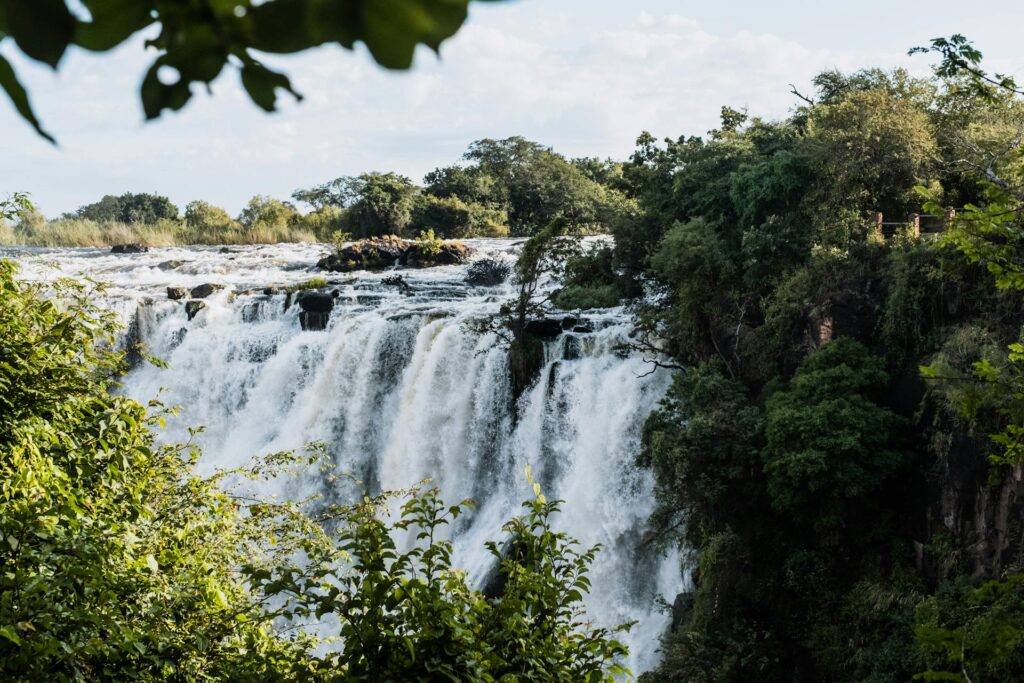
The Okavango Delta sits in relatively close proximity to Chobe National Park and Zimbabwe’s Victoria Falls, and combining two or three of these destinations makes for an extraordinary Southern Africa itinerary. The delta and Chobe together cover water wilderness and elephant-rich savannah. Adding Victoria Falls creates one of Africa’s classic three-destination combinations, covering roughly 10 to 12 days.
Book early for peak season
The best camps in the most productive areas fill up for July, August, and September well in advance, often 12 to 18 months ahead. If you want specific camps during peak season, planning early is not optional. For shoulder and green season travel there is much more flexibility, and last-minute availability occasionally opens up at excellent properties.
Our team has deep relationships with camps across all areas of the Okavango Delta. Get in touch with Maudie Safaris and we will help you find the right camp, the right area, and the right time for the trip you are imagining.
Frequently Asked Questions About the Okavango Delta
Is the Okavango Delta worth the expense?
For most visitors, yes, emphatically. The Okavango Delta offers an experience that is genuinely unique in the world. There is nowhere else on earth where you can glide silently through a papyrus channel in a mokoro, watch elephants crossing a flooded plain, and then go on a walking safari through mopane woodland all in the same day. The higher price reflects both the quality of the experience and Botswana’s deliberate commitment to low-volume, high-value tourism that protects its wilderness. That said, timing and camp choice have a significant impact on value. Shoulder season visits to well-chosen camps can deliver most of what peak season offers at considerably lower cost.
How long should I spend in the Okavango Delta?
A minimum of three nights in any single area is recommended to give you time to settle in, experience multiple game drives and water activities, and allow the delta to reveal itself gradually. Four to five nights is ideal for a proper immersion. If you are combining two different areas of the delta, a week to ten days gives you the full breadth of what the ecosystem offers.
What is the best area of the Okavango Delta for first-time visitors?
For first-time visitors, we most often recommend camps in and around Moremi Game Reserve or the Khwai area. These offer the best combination of water-based activities and big-game land viewing, are slightly more accessible logistically than the deep delta, and tend to offer better overall value. The deep permanent delta is extraordinary but benefits from a visitor who already has some understanding of what a delta experience involves.
Is the Okavango Delta malaria risk a concern?
Yes. The Okavango Delta is a malaria area and antimalarial medication is strongly recommended for all visitors. The risk is higher during the wetter, warmer months (November to April) and lower during the dry season, but it is present year-round. Consult a travel health professional well in advance of your trip for advice on the most appropriate prophylaxis for your itinerary and personal health situation.
Can children visit the Okavango Delta?
Many camps in the Okavango Delta have minimum age requirements, often six or eight years old, particularly for activities like walking safaris and mokoro excursions. Some camps are genuinely family-friendly and have specific programmes for younger visitors. If you are travelling with children, tell us their ages when you enquire and we will identify the lodges that genuinely welcome and cater for families rather than simply tolerate them.
What is the difference between a mokoro and a boat safari?
A mokoro is a traditional dugout canoe poled silently through shallow channels and lagoons, offering an intimate, quiet, ground-level experience of the delta’s waterways. A motorboat safari covers more distance, operates on deeper open water, and is better for spotting wildlife across larger areas. Most good delta camps offer both, and combining them gives you the full range of what the delta’s waterways have to offer.
Do I need to go to the Okavango Delta during the flood?
Not necessarily. The flood-season version of the delta is spectacular but the dry-season experience, particularly October and November as waters recede and wildlife concentrates, is equally valid and significantly more affordable. The right time depends on your priorities. Water activities and the flooded papyrus landscape are flood-season exclusive. Big-game viewing at its most intense is actually better in October and November.
Ready to Experience the Okavango Delta?
The Okavango Delta is one of those places that changes people. Spend a week there and you will come home with a different relationship with silence, with wildlife, with water, and with the extraordinary, improbable generosity of the natural world.
It is not the easiest destination to plan well. The variety of camps, areas, seasons, and activity combinations is genuinely complex, and the difference between a mediocre delta experience and an exceptional one often comes down to knowing which camp to choose and when to go.
That is exactly the kind of decision our team at Maudie Safaris is here to help with. We have spent considerable time in the delta, across different areas and different seasons. We know which camps are worth the price, which areas suit which types of traveller, and how to build an itinerary that gives you the full depth of what the Okavango has to offer.
Get in touch with the Maudie Safaris team here. Tell us when you want to go, what you are hoping to experience, and what your budget looks like. We will take it from there.


