

-
Year-round (June – September for dry weather; January – February for calving season)
-
Rim-view Luxury Lodges / Country Lodges in Karatu
-
4x4 Land Cruiser (Mandatory for the steep descent and ascent)
-
Breakfast, Lunch & Dinner
Destination Overview
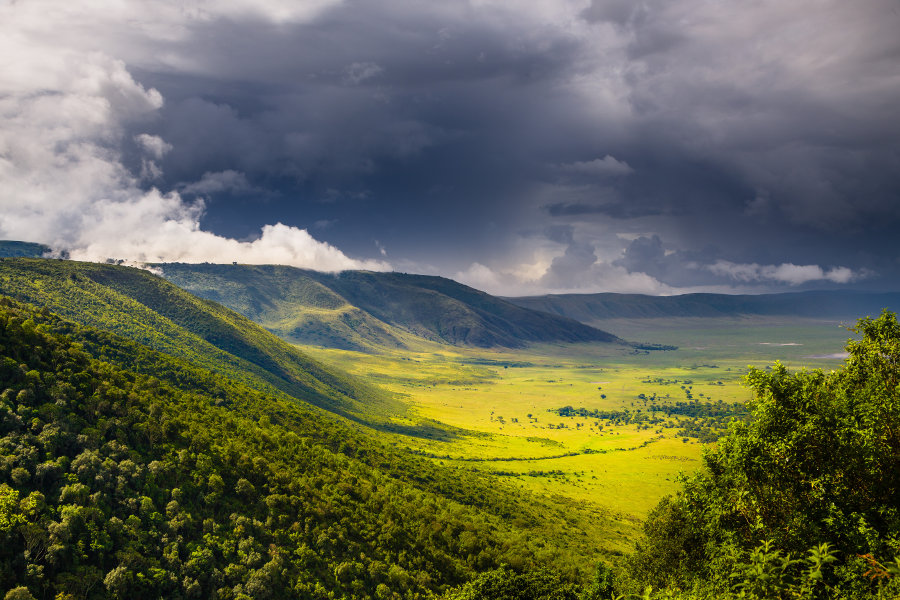
The Ngorongoro Crater is a geological marvel and a wildlife haven without parallel. As the world’s largest inactive, intact, and unfilled volcanic caldera, it forms a natural “bowl” encompassing 260 square kilometers of nutrient-rich grasslands, acacia forests, and soda lakes.
At Maudie Safaris, we often describe the Crater as a “fishbowl of wildlife.” Because the crater walls rise 600 meters high, the animals here are largely resident year-round. It is one of the few places in Africa where you can stand on the rim in the morning mist, descend into the caldera, and potentially see the entire Big Five – Lion, Leopard, Elephant, Buffalo, and the rare Black Rhino before lunch.
Preserving the Ecosystem
The Ngorongoro Conservation Area (NCA) is unique because it is a multi-use area where wildlife coexists with semi-nomadic Maasai pastoralists. It is a UNESCO World Heritage Site that protects not just animals, but human history. Maudie Safaris is committed to responsible tourism here, ensuring that our visits respect the delicate balance of this enclosed ecosystem. Your park fees contribute heavily to the intense anti-poaching measures required to keep the Black Rhino population safe and thriving within the crater walls.
Highlights
- The Black Rhino: The Crater offers the highest probability of spotting these critically endangered giants in East Africa.
- The Caldera View: The view from the crater rim, looking down into the vast green bowl, is arguably the most famous view in Africa.
- Highest Predator Density: The crater floor has one of the highest densities of lions and spotted hyenas in the world.
- Lake Magadi: A soda lake on the crater floor that often turns pink with thousands of Lesser Flamingos.
- The Lerai Forest: A beautiful fever-tree forest known for leopard sightings and old bull elephants with massive tusks.
- Olduvai Gorge: Located nearby within the NCA, known as the "Cradle of Mankind" where early human fossils were discovered.