

 Wildlife Tours
Okavango Delta Climate Guide: The Best and Worst Months for a Safari
Okavango Delta Climate Guide: The Best and Worst Months for a Safari
Timing is everything when it comes to the Okavango Delta. Visit at the right time for your priorities and you will have an experience that stays with you for the rest of your life. Visit at the wrong time and you might find water where you expected dry land, empty floodplains where you expected concentrations of wildlife, or lodge prices that did not fit the budget.
The good news is that the Okavango Delta is genuinely rewarding to visit year-round. There is no truly bad month, just different months that suit different priorities. The key is understanding what each season offers and matching it to what you actually want from your safari.
This guide walks you through the Okavango Delta climate month by month, season by season, covering temperatures, rainfall, flood levels, wildlife behaviour, activity availability, crowd levels, and lodge prices. By the end, you will know exactly when to go and why.
Not sure which season suits you best? Talk to the Maudie Safaris team and we will help you figure out the right time based on your specific priorities and budget.
Understanding the Okavango Delta Climate
Before diving into the monthly breakdown, it helps to understand the two forces that shape the Okavango Delta’s climate: local weather patterns and the Angolan flood.
Local weather: two distinct seasons
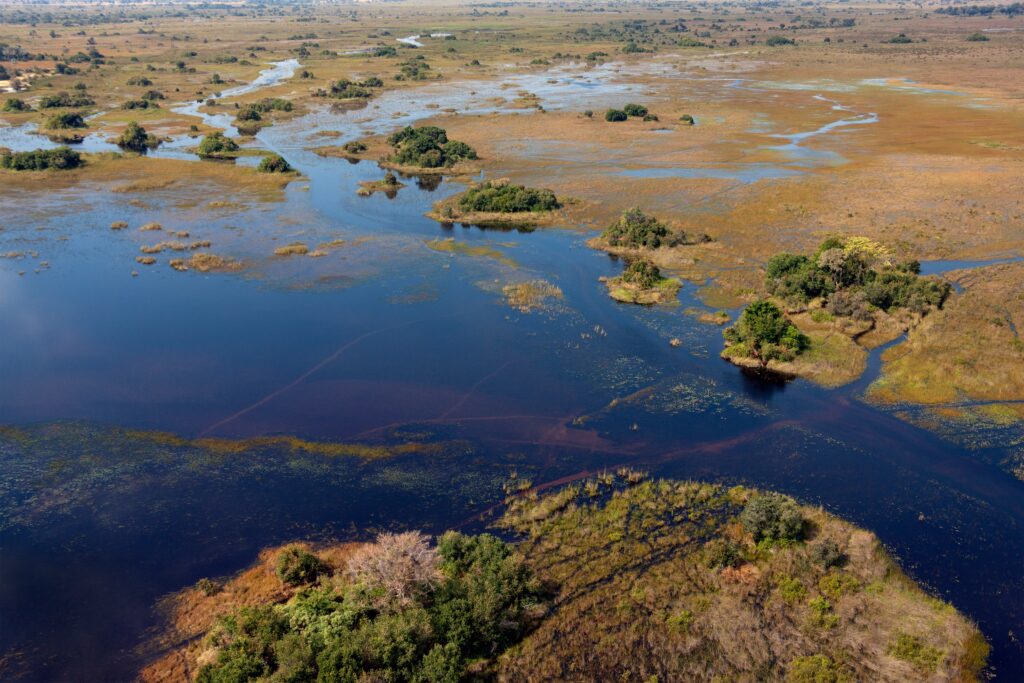
The Okavango Delta sits in northern Botswana and experiences a classic sub-tropical climate with two clearly defined seasons.
- The wet season (November to March): Hot, humid, and rainy. Afternoon thunderstorms are common. Temperatures regularly reach 33 to 35 degrees Celsius. Vegetation is lush and green. Migratory birds are present. Mosquito activity is higher. Lodge prices are at their lowest.
- The dry season (April to October): Warm to hot days with cool to cold nights, particularly June and July when night temperatures can drop below 5 degrees Celsius. No meaningful rainfall from May to September. Vegetation thins out as the season progresses. Wildlife becomes increasingly easy to spot as cover disappears.
The Angolan flood: the delta’s other climate force
Here is where the Okavango gets interesting and where most first-time visitors get confused. The flooding of the delta is not caused by local rainfall. It is caused by rains that fall in the highlands of Angola between November and March, roughly 1,000 kilometres away.
That floodwater travels slowly south and southeast along the Okavango River, eventually reaching the delta somewhere between April and June. The peak flood typically arrives between July and August. So the delta is at its fullest, its most watery, and its most photogenic precisely when the local climate is at its driest and coolest.
This is the counterintuitive magic of the Okavango: an inland sea in the middle of a desert, filled by a faraway river, at the driest time of year. Understanding this flood cycle is the single most important piece of knowledge for planning your trip.
Month-by-Month Climate and Safari Conditions
Use this table as your at-a-glance reference for every month of the year. Scroll down for the detailed month-by-month breakdown with the full picture of what each period actually feels like on the ground.
| Jan | Feb | Mar | Apr | May | Jun | Jul | Aug | Sep | Oct | Nov | Dec | |
| Avg high (°C) | 33 | 33 | 32 | 30 | 27 | 24 | 23 | 26 | 31 | 34 | 34 | 33 |
| Avg low (°C) | 19 | 19 | 18 | 15 | 11 | 7 | 5 | 8 | 13 | 18 | 19 | 19 |
| Rainfall (mm) | 90 | 80 | 65 | 25 | 5 | 0 | 0 | 0 | 5 | 30 | 65 | 90 |
| Flood level | Low | Low | Low | Rising | Rising | High | Peak | Peak | High | Fall. | Low | Low |
| Game viewing | Good | Good | Good | Good | V.Gd | V.Gd | Excl | Excl | Excl | Excl | Good | Good |
| Water activities | Mod | Mod | Mod | Good | V.Gd | V.Gd | Excl | Excl | V.Gd | Mod | Low | Mod |
| Walking safaris | Good | Good | Good | V.Gd | V.Gd | Good | Good | Good | V.Gd | Excl | Good | Good |
| Crowd level | Low | Low | Low | Low | Mid | Mid | High | High | High | Mid | Low | Low |
| Lodge prices | Low | Low | Low | Low | Mid | Mid | High | High | High | Mid | Low | Low |
Season by Season: The Full Picture
| Peak Season (July to September) Overall rating: Exceptional | |
| Temperatures | Days 23 to 28°C, nights 5 to 12°C. Cool to warm. Clear blue skies. Perfect game drive conditions. |
| Rainfall | Essentially zero. The driest months of the year. |
| Flood level | At or near peak. Maximum water coverage across the delta. |
| Game viewing | Exceptional. Wildlife concentrates around water on the drying floodplain edges. |
| Water activities | At their very best. Mokoro and boat safaris cover enormous areas of flooded papyrus and lagoon. |
| Walking safaris | Good. Comfortable temperatures and thin vegetation make for excellent tracking conditions. |
| Birdlife | Outstanding resident species year-round. Some summer migrants have left but overall diversity remains high. |
| Crowds | High. The most popular period with peak visitor numbers at most camps. |
| Lodge prices | Highest of the year. Some camps charge a premium surcharge on top of standard peak rates. |
| Best for | First-time visitors wanting the iconic Okavango experience. Wildlife photographers. Water activity enthusiasts. |
July, August, and September are the months when the Okavango Delta looks the way it looks in every photograph you have ever seen of it. The floodwater that left Angola months earlier has arrived and spread across the delta, creating a vast, shimmering wilderness of channels, lagoons, flooded papyrus stands, and water-lapped islands.
At the same time, the surrounding landscape is bone dry. The Kalahari, which makes up most of Botswana, has had no meaningful rain since April. This drought drives enormous concentrations of wildlife toward the delta’s water, and the contrast between the parched landscape and the flooded delta creates some of Africa’s most dramatic wildlife encounters.
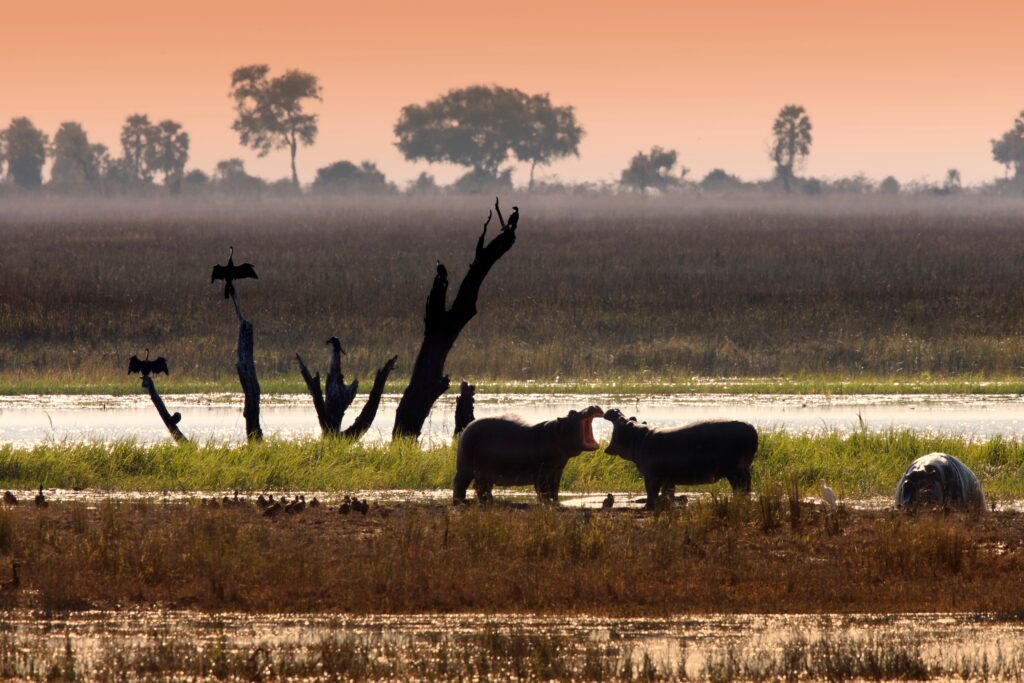
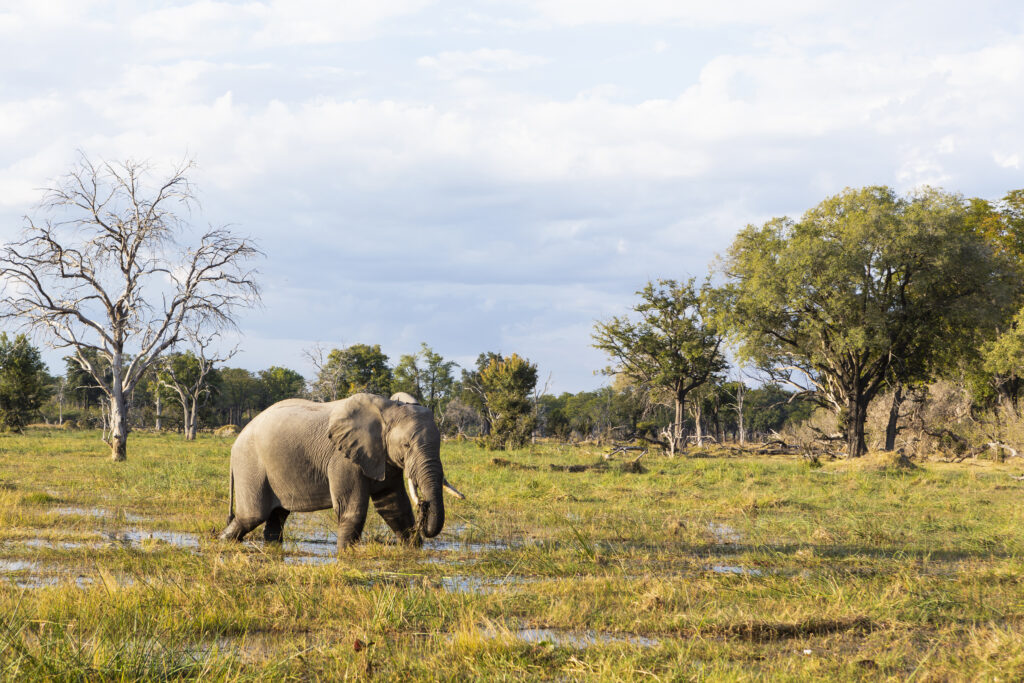
Elephant herds of fifty or more congregate at the floodplain edges. Lion prides are active and visible across open ground. Leopards hunt along the riverine forest margins. Wild dog packs range across the drying grasslands. On the water, red lechwe splash through the shallows in their hundreds, hippo pods fill every lagoon, and the call of the fish eagle carries across the channels from first light.
The only real downsides of peak season are the price and the company. July, August, and early September are the most expensive months to visit, and the most popular. The best camps book out 12 to 18 months in advance. If peak season is your target window, plan early.
| Shoulder Season (October to November) Overall rating: Very Good to Exceptional | |
| Temperatures | Warming rapidly. October reaches 33 to 34°C. November brings the first heat and humidity of summer. |
| Rainfall | Very low in October, increasing in November as the first storms arrive. |
| Flood level | Receding. Water retreating from seasonal areas. Permanent water remains. |
| Game viewing | Exceptional in October as wildlife crowds remaining water. Very good in November. |
| Water activities | Reducing in October, limited in November as water levels fall in seasonal areas. |
| Walking safaris | Very good in October (dry conditions, great tracking). Good in November. |
| Birdlife | Excellent. Resident species plus early arrival of summer migrants from November. |
| Crowds | Moderate in October, low in November. A significant drop from peak season. |
| Lodge prices | Mid-range in October, beginning to drop in November toward green season rates. |
| Best for | Value seekers wanting excellent game viewing without peak prices. Wildlife photographers after dramatic dry-season scenes. |
October and November are, in our honest opinion, one of the most underrated windows for an Okavango Delta safari. The peak-season crowds have dispersed, lodge rates are dropping, and the game viewing in October is arguably the most intense of the entire year.
Here is why. As the flood recedes through October, the seasonal floodplains dry out and the wildlife that has been spread across the delta during the wet flood months is now funnelled toward the remaining permanent water sources. Elephant herds gather at waterholes in numbers that beggar belief. Buffalo concentrate in massive aggregations. Predators follow the prey and sightings become almost constant.
October is also one of the best months in the entire year for walking safaris in the delta. The vegetation is at its most open after months without rain, which means visibility is excellent and tracking conditions are superb. The temperatures are warm rather than hot in the early morning, and the energy of the bush as the dry season reaches its peak is palpable.
November shifts the mood. The first rains arrive, temperatures climb, and the landscape begins its transformation from brown to green. Water activities become limited as seasonal channels dry out, but the birding improves dramatically as summer migrants begin to arrive. November is a transitional month with its own character, its own appeal, and its own very reasonable price tag.
| Green Season (December to March) Overall rating: Good to Very Good | |
| Temperatures | Hot and humid. 32 to 34°C most days. Afternoons can feel oppressive before storm relief arrives. |
| Rainfall | Highest of the year. Afternoon and evening thunderstorms are frequent, often dramatic. |
| Flood level | Delta at its local low. Permanent water remains. Angolan flood begins arriving from around April. |
| Game viewing | Good. Wildlife is dispersed across the landscape as water is available everywhere. |
| Water activities | Moderate. Permanent channels remain navigable. Seasonal areas are dry or very low. |
| Walking safaris | Good. Comfortable for early mornings before the heat builds. |
| Birdlife | Outstanding. Peak diversity with full complement of summer migrants present. |
| Crowds | Very low. The quietest period of the entire year. |
| Lodge prices | Lowest of the year. Significant savings available compared to peak season. |
| Best for | Birders. Budget-conscious travellers. Photographers wanting lush green landscapes. Those who want the delta largely to themselves. |
The green season is the Okavango Delta’s hidden chapter, and one that is far better than its reputation suggests. Most first-time visitors to the delta plan their trip around the peak flood season and overlook the wet season entirely. That is understandable but it means missing something genuinely special.
The delta in December, January, February, and March is a completely different environment from its dry-season self. The landscape is intensely green after months of rain, the skies are dramatic with towering afternoon thunderclouds, the air smells of rain and fresh vegetation, and the bird life is simply extraordinary.
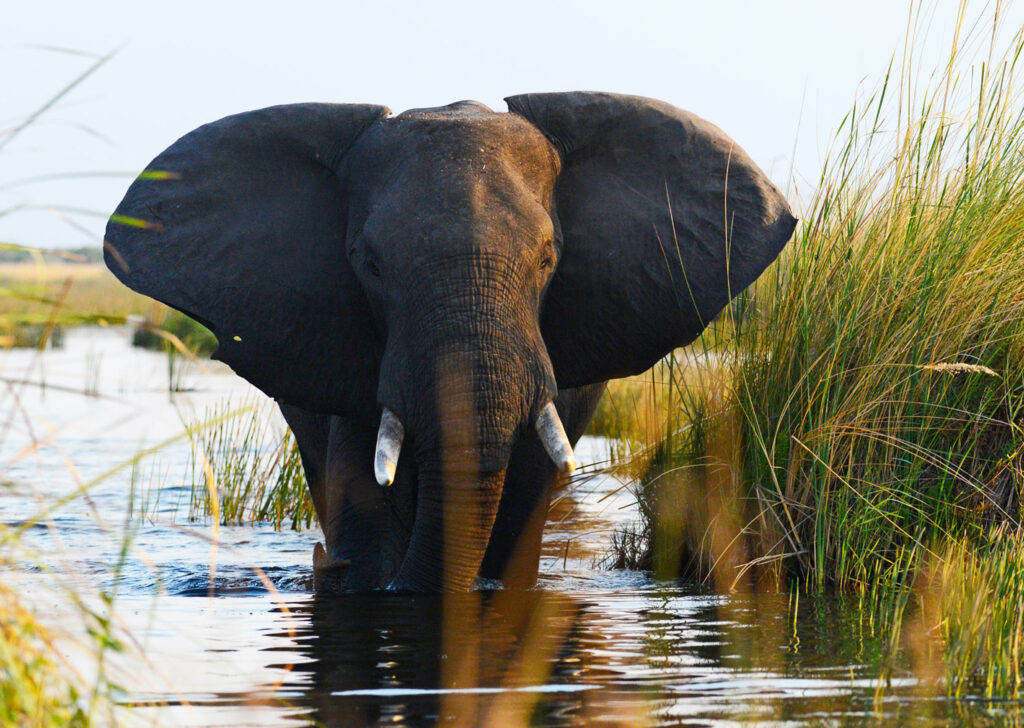
This is the time of year when summer migrants are present in force. Carmine bee-eaters, woodland kingfishers, European rollers, storks, herons, and dozens of other species that are absent or scarce in the dry season are suddenly everywhere. For serious birders, the green season Okavango is a revelation.
The game viewing is different rather than absent. Because water is available across the landscape from local rainfall, wildlife disperses rather than concentrating at permanent sources. You will not see the dramatic dry-season aggregations of hundreds of animals around a single waterhole, but you will see the bush alive with newborns, as January and February are the peak calving months for many species. Impala lambs, elephant calves, zebra foals, and warthog piglets are everywhere during this period. Predators with cubs and pups are active and often surprisingly visible.
And then there is the price. Green season lodge rates can be 30 to 50 percent lower than peak season. Some camps close entirely for part of the wet season, but those that remain open often offer exceptional value, with discounted rates, near-empty game drives, and a level of personal attention that is impossible to replicate when every vehicle in the reserve is full.
| Rising Flood Season (April to June) Overall rating: Very Good | |
| Temperatures | Cooling noticeably. April around 30°C. June dropping to 24°C by day and genuinely cool at night. |
| Rainfall | Tapering off. April can still see rain. May and June are essentially dry. |
| Flood level | Rising steadily as Angolan floodwater arrives. May and June see dramatic changes week by week. |
| Game viewing | Very good and improving. Animals still somewhat dispersed in April, concentrating in May and June. |
| Water activities | Improving rapidly. By June, mokoro and boat safaris are excellent across much of the delta. |
| Walking safaris | Very good. Comfortable temperatures, improving visibility as vegetation dries. |
| Birdlife | Good. Summer migrants beginning to depart, resident species in excellent condition. |
| Crowds | Low to moderate. Below peak levels with good availability at most camps. |
| Lodge prices | Mid-range. Below peak prices but rising from green season lows. |
| Best for | Travellers wanting a balance of water activities and game drives without peak-season prices or crowds. |
April, May, and June occupy a genuinely interesting transitional window that is increasingly recognised as one of the smarter times to visit the Okavango Delta. The long rains are over, temperatures are dropping toward comfortable game drive conditions, and the Angolan floodwater is arriving.
What makes this period particularly interesting is watching the flood arrive in real time. In May and June, the water level in the delta rises noticeably week by week. Channels that were dry in April are navigable by mokoro in June. Islands that were accessible on foot in May require a boat to reach in June. The delta is physically transforming around you, and there is something deeply compelling about witnessing that process.
By June, the flood has reached much of the seasonal delta and water activities are genuinely excellent. The game viewing is strong, with wildlife beginning to concentrate as the dry season tightens its grip on the surrounding landscape. And because July has not arrived yet, lodge prices are still below peak levels and availability is good.
June in particular is what safari operators sometimes call a shoulder season sweet spot: flood levels are already high in much of the delta, game viewing is excellent, temperatures are pleasant without being cold, and you can often get into camps that would have been fully booked by August. It is not the most dramatic month in the delta, but it is very often the best value for the quality of experience on offer.
Quick Month-by-Month Summary
Here is the condensed version for each month, useful for quick comparisons when you are narrowing down your travel dates.
Hot, humid, and rainy. Delta at its local low. Exceptional birding with full complement of summer migrants. Very quiet, lowest prices of the year. Good for birders and budget travellers.
Similar to January. Peak heat and humidity. Peak calving season for many species. Young animals everywhere. Dramatic afternoon thunderstorms. Excellent value.
Rains beginning to ease. Still hot and humid. Vegetation at its most lush. Summer migrants starting to depart. Very affordable with excellent birding.
Transition month. Rains tapering off. Temperatures cooling. Angolan flood beginning its journey south. Game viewing improving as vegetation opens up. Good value.
Flood arriving and rising rapidly. Noticeably cooler. Vegetation drying and thinning. Game viewing strengthening. Water activities becoming very good in the permanent delta. Mid-range pricing.
Excellent overall. Flood well established across much of the delta. Cool, clear days. Game viewing strong and improving. Water activities excellent. Below peak pricing with good availability.
Peak flood. Peak game viewing. Peak everything. The classic Okavango experience at its most spectacular. Also peak prices and peak crowds. Book 12 to 18 months in advance.
Arguably the finest month for combining water activities and big game viewing. Flood at or near maximum. Wildlife density on floodplain edges extraordinary. Peak season in every sense.
Flood beginning to recede but still very high. Wildlife concentrating as water retreats. Game viewing intensifying. Prices starting to ease slightly from August peak. Excellent month overall.
The hidden gem month. Crowds dropping, prices falling, game viewing at its absolute most intense as wildlife concentrates on remaining water. Highly recommended for value-conscious travellers.
Transition to wet season. First rains arrive, temperatures climb. Game viewing still good early in the month. Water activities reducing. Summer migrants arriving. Prices low.
Green season begins in earnest. Hot, humid, afternoon thunderstorms. Excellent birding. Very quiet. Lowest prices. A completely different but genuinely special version of the delta.
When to Go Based on What Matters Most to You
Not everyone wants the same thing from a delta safari. Here is a direct recommendation for each type of traveller, based on what we have seen work best over many years of sending clients to the Okavango.
If you want the iconic flooded delta experience
Go in July or August. This is peak flood and peak season for a reason. The water is at its maximum, the mokoro excursions cover enormous areas of flooded papyrus, the lagoons are full and reflective, and the combination of water and wildlife is simply extraordinary. Accept that you will pay peak prices and book at least 12 months in advance for the best camps.
If you want the best game viewing at the best value
Go in October. It is the month our team recommends most often to clients who ask for our honest opinion on timing. The crowds from peak season have dispersed, prices have dropped from their July and August highs, and the game viewing as the flood recedes and wildlife concentrates on remaining water is genuinely outstanding. October often outperforms July for big game encounters, at a considerably lower price.
If you are a serious birder
The peak birding months are November to March when summer migrants are present alongside the full year-round resident community. January and February offer the widest overall diversity. If you are prepared to trade some big-game viewing intensity for extraordinary birding and very low prices, the green season is hard to beat. Combine it with the permanent delta camps that remain open year-round for the best water-based access.
If you are travelling on a tighter budget
November through to May offers the most affordable lodge rates of the year. Within that window, December, January, and February are the cheapest months overall. April and May offer improving conditions at prices still well below the peak season. If budget is your primary constraint, target the shoulder season rather than the heart of the wet season for the best combination of price and quality.
If you want to avoid the crowds entirely
November, December, January, and February are the quietest months in the delta. You will have game drives essentially to yourself, personal attention from guides and camp staff that is impossible during busy periods, and the satisfaction of experiencing a side of the Okavango that most visitors never see. The trade-off is heat, humidity, and a different character of wildlife experience.
If this is your first safari and you want the full picture
Go in June or early July. You get the flood arriving or already high, game viewing that is strong and improving, temperatures that are comfortable without being cold, and prices that are below the August peak. Availability is better than August and September. The experience is comprehensive rather than exceptional in any single dimension, which is exactly what a first-time visitor to the delta needs. It covers the bases beautifully.
What to Pack for Each Season
Packing for the Okavango Delta varies more by season than almost any other African safari destination. Here is what our team recommends for each period.
Peak season packing (June to September)
- A proper warm layer for early morning game drives. A fleece or light down jacket is essential in July and August when temperatures before sunrise can be genuinely cold in an open vehicle.
- Neutral-coloured clothing in khaki, olive, sand, or grey. Avoid bright colours and blue, which attracts tsetse flies.
- Sun protection including factor 50 sunscreen, a wide-brimmed hat, and UV sunglasses. The winter sun is deceptively strong.
- Soft-sided luggage only. Bush plane weight limits are strictly enforced and hard suitcases cannot be accommodated. Pack in a duffel bag of 15kg or less.
- Binoculars. Non-negotiable for both game viewing and birding.
Green season and shoulder season packing (October to May)
- Lighter clothing for the warmer months but still in neutral tones. Breathable fabrics in cotton or linen are more comfortable than synthetics in the heat.
- A lightweight waterproof layer for afternoon thunderstorms in the wet season months. A packable rain jacket is far more useful than a heavy waterproof.
- Higher-factor insect repellent containing DEET and long-sleeved shirts and trousers for evenings, when mosquito activity is highest.
- Antimalarial medication as prescribed by your travel health provider. More important during the wet season but essential year-round.
- A power bank for charging devices. Some remote camps have limited charging options, particularly in wet season when solar generation is less reliable.
Frequently Asked Questions About the Okavango Delta Climate
What is the best month to visit the Okavango Delta?
It depends on your priorities. July and August offer the classic flooded delta experience at peak season prices. October offers exceptional game viewing at post-peak prices with fewer crowds. June is our most recommended month for first-time visitors wanting a comprehensive experience without paying the August premium. There is genuinely no single best month, only the best month for what you specifically want.
Is the Okavango Delta good to visit in the rainy season?
Yes, genuinely. The green season from December to March offers extraordinary birding, lush landscapes, young animals, very low prices, and the chance to experience the delta in near-total solitude. The game viewing is different from the dry season rather than worse. Afternoon thunderstorms are normal but usually brief. If you are flexible and curious, the rainy season Okavango is a fascinating and underrated experience.
How cold does it get in the Okavango Delta in winter?
Colder than most visitors expect. July and August night temperatures can drop to around 5 degrees Celsius, and early morning game drives in an open vehicle at those temperatures feel significantly colder due to wind chill. A warm fleece or lightweight down jacket is essential, not optional, for winter visits. Days warm up quickly once the sun is properly up, typically reaching a comfortable 24 to 26 degrees Celsius by mid-morning.
When does the Okavango Delta flood?
The flood is caused by rains in Angola rather than local rainfall, which is why it arrives during Botswana’s dry season. Floodwater typically begins arriving in the delta in April, rises through May and June, reaches its peak in July and August, and then gradually recedes through September and October. By November and December the seasonal areas are dry again, with only the permanent channels retaining water year-round.
Is October a good time to visit the Okavango Delta?
October is one of the best months to visit the Okavango Delta, particularly for game viewing. As the flood recedes, wildlife concentrates on the remaining water sources in extraordinary numbers. Predator sightings intensify. Elephant aggregations are dramatic. The vegetation is open and visibility is excellent. Crowd levels have dropped from the peak season and prices are below August highs. The main trade-off is that water-based activities are more limited than in July or August.
What is the temperature in the Okavango Delta in July?
July is the coldest month of the year in the Okavango Delta. Daytime temperatures reach around 23 to 25 degrees Celsius, which feels pleasant and comfortable for game drives. Night temperatures drop to around 5 to 8 degrees Celsius, and pre-dawn temperatures in an open game drive vehicle can feel significantly colder with wind chill. Pack warm layers for early mornings. By midday the temperature is comfortable in a light shirt.
Can you visit the Okavango Delta in December?
Yes. December is a perfectly valid time to visit the Okavango Delta, particularly for birders and travellers on a tighter budget. The delta is at its quietest and most affordable in December. The green season brings lush landscapes, dramatic skies, young animals, and extraordinary birding diversity. The game viewing is different from the dry season but not absent. Camps that remain open in December often offer excellent value and a very personal experience.
Ready to Plan Your Okavango Delta Safari?
Choosing the right time to visit the Okavango Delta is genuinely the most important planning decision you will make. Get it right and every element of the experience, the water activities, the wildlife, the atmosphere, fits together perfectly. Get it wrong and you might find yourself visiting during a window that does not match what you were hoping for.
The good news is that there is a right time for almost every type of traveller. You just need to know where to look.
Our team at Maudie Safaris has spent considerable time in the delta across all seasons. We know which camps operate in the green season and do it well. We know which areas have the best game viewing in October. We know which months give you the most water for the money. And we can build you an itinerary around your specific travel dates, priorities, and budget.
Get in touch with the Maudie Safaris team here. Tell us when you are thinking of going and what matters most to you, and we will give you an honest recommendation on whether your timing works and how to make the most of it.

