

 Uncategorized
Luxury Safari Hotels vs. Tented Camps – Which Delivers the Real Africa Experience?
Luxury Safari Hotel vs Tented Camp: Which Is Right for Your Safari?
This is one of the most common questions we get at Maudie Safaris: should I stay in a luxury safari hotel or a tented camp? And the honest answer is: it depends entirely on what you want Africa to feel like.
This guide breaks down everything you need to know – the atmosphere, the wildlife access, the comfort levels, the costs, and the intangibles that no booking site will tell you – so you can make the right call for your trip.
First, let’s define the two options
Before we compare them, it helps to understand what we’re actually talking about. Both terms get used loosely in the safari industry, and the overlap can be confusing.
What is a luxury safari hotel?
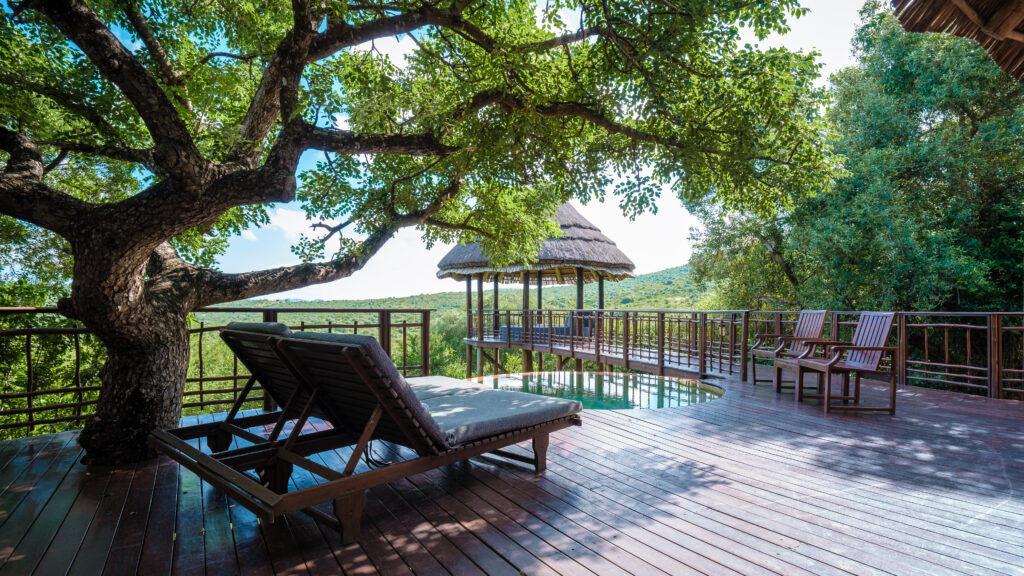
A luxury safari hotel is a permanent, brick-and-mortar structure built within or adjacent to a game reserve or national park. Think tiled floors, air conditioning, multi-course restaurant dining, swimming pools, and spa facilities. These are the kinds of properties that could credibly compete with a five-star city hotel – except they happen to be surrounded by wilderness. Examples include large lodges in the Masai Mara, permanent resort-style properties along Tanzania’s Serengeti, and high-end lodges bordering South Africa’s Kruger National Park.
What is a tented camp?
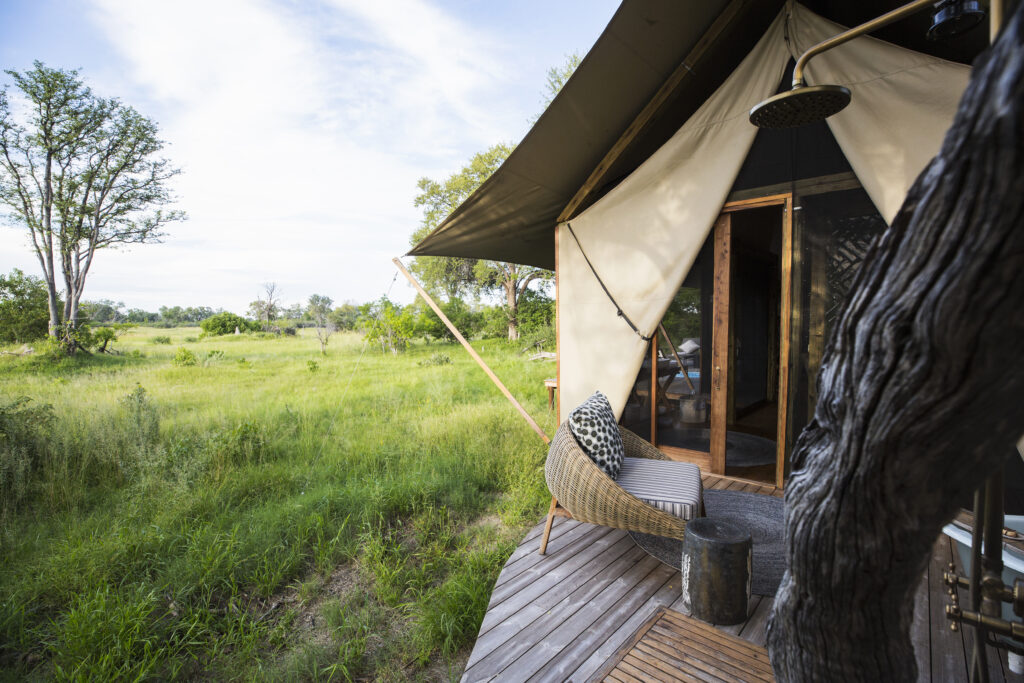
A tented camp is accommodation built primarily from canvas – but do not let that fool you. Modern luxury tented camps are far removed from camping. You’re looking at king-sized beds, hardwood floors, en-suite bathrooms with rainfall showers, and private verandas overlooking the bush. The canvas walls are the point: they let the sounds, the smells, and the temperature of the wilderness into your space in a way that no concrete wall ever could. From mobile camps that move with the Migration to fixed luxury tents in private conservancies, this category covers an enormous range.
The core comparison: what each one actually gives you
Luxury safari hotels
- Permanent, climate-controlled structures
- Swimming pools, spa, gym facilities
- Formal restaurant dining, full wine list
- Higher guest capacity, busier atmosphere
- Often located just outside park boundaries
- Strong Wi-Fi, reliable power supply
- Easier accessibility, larger vehicles
- Better suited to guests with mobility needs
Luxury tented camps
- Canvas walls, open to the sounds of the bush
- Smaller, more intimate (6 to 20 tents typically)
- Dining is communal, often around a fire
- Frequently located inside park or conservancy
- Wildlife can (and does) walk through camp
- Limited Wi-Fi by design, solar power common
- Mobile camps move seasonally for best game
- Deeper immersion in the natural environment
Wildlife access: the difference is bigger than you think
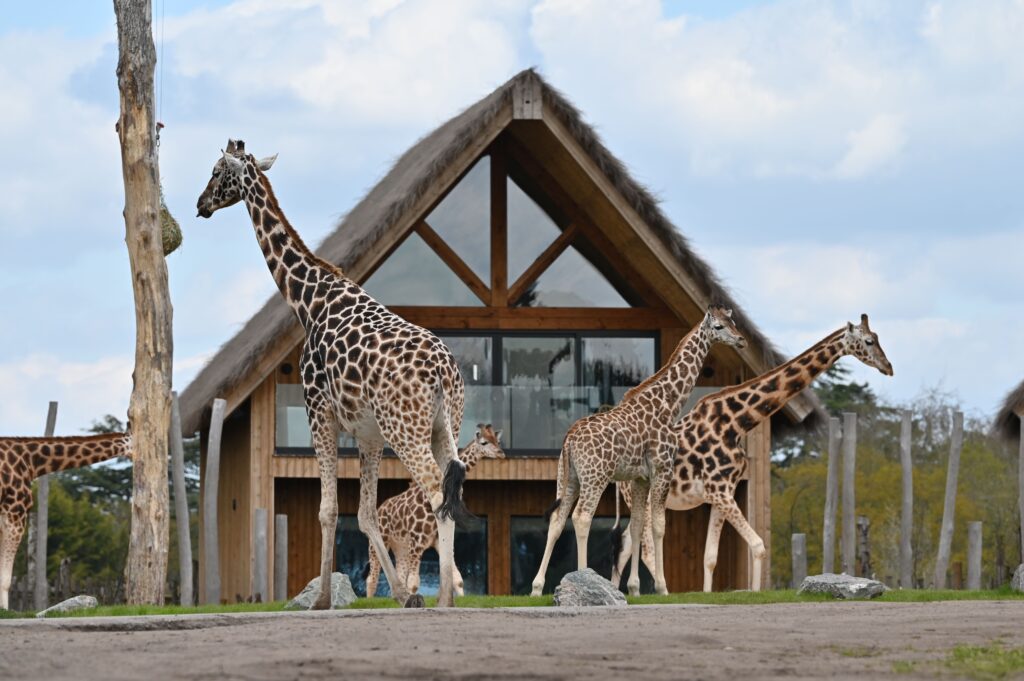
This is where the gap between hotels and tented camps becomes most significant – and most misunderstood by first-time safari travellers.
Luxury safari hotels are almost always located outside national park boundaries. This is because permanent structures are not permitted inside most protected areas in Kenya and Tanzania. That means every morning and evening game drive requires a drive to the park gate, time lost in transit, and often sharing the park roads with vehicles from many other properties.
Luxury tented camps, particularly those inside private conservancies like the Mara conservancies surrounding the Masai Mara or Ol Pejeta, operate under completely different rules. They can offer:
- Off-road driving, so your guide can follow a leopard into the bush rather than watching from the track
- Night game drives, which are banned in most national parks but permitted in private conservancies
- Walking safaris alongside a professional armed guide
- Fewer vehicles at any one sighting, because the conservancy limits the total number of beds
- Game drives that begin the moment you leave your tent, not after a 30-minute drive to a gate
If maximum wildlife immersion is your priority, a well-positioned tented camp inside a private conservancy will almost always outperform a luxury hotel on this measure.
The atmosphere question: which one feels more like Africa?
This is subjective – but it matters, and it’s worth being honest about.
There is something unmistakable about falling asleep in a tented camp. The canvas flexes in the wind. You hear the hippos moving on the river. A lion calls in the distance and you feel it in your chest before you fully understand what it is. At 3am, something large walks past your tent and your heart does something you did not know hearts could do. That is Africa. That is the thing people come back for.
A luxury safari hotel is magnificent in its own right. Breakfast beside an infinity pool with a giraffe silhouette on the horizon. Sundowners at a rooftop bar with views across the savannah. A spa treatment and a glass of wine before a game drive. These are genuinely wonderful experiences. But the wilderness remains, in a sense, outside the glass. You observe it from a comfortable distance.
Neither approach is wrong. They serve different travellers and different moods. The question is: what do you actually want to feel?
Comfort and practicalities: setting the record straight
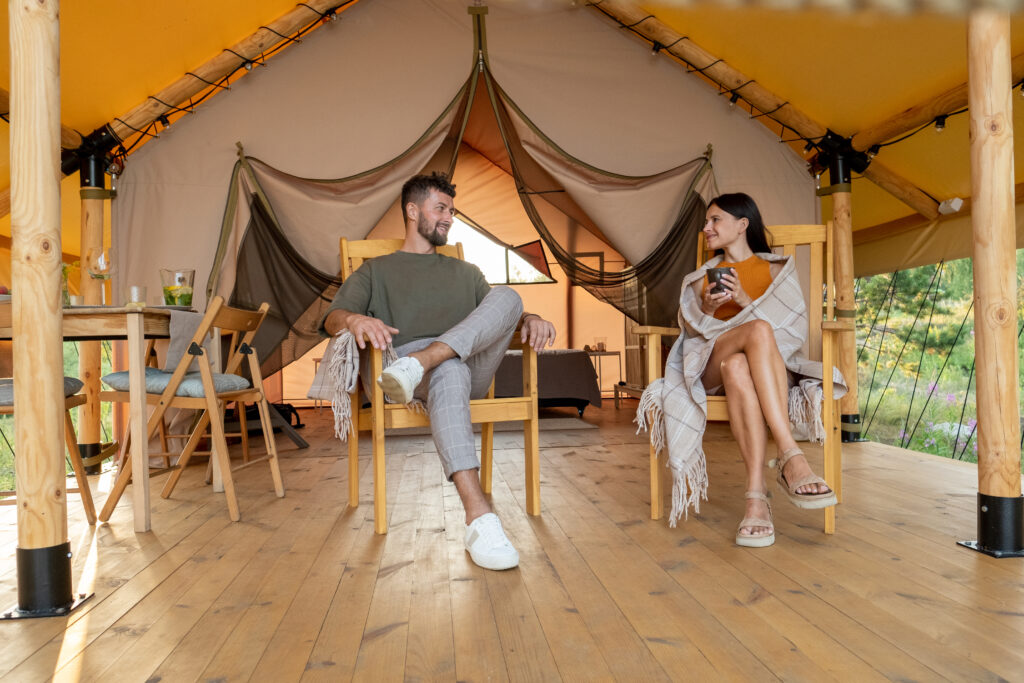
One of the most persistent myths in safari travel is that tented camps mean roughing it. This has not been true for at least two decades at the upper end of the market.
A high-quality luxury tented camp in Kenya or Tanzania will offer:
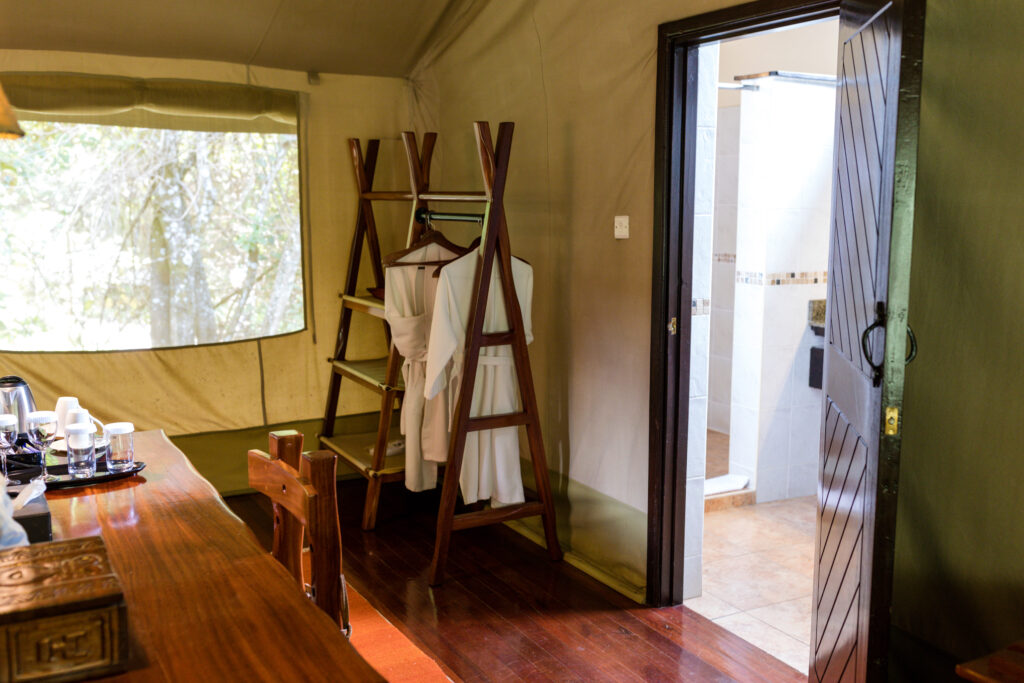
- A king or twin bed with high-thread-count linen and a proper mattress
- An en-suite bathroom, often open-air, with a clawfoot tub or large shower
- A private veranda with a daybed or armchairs looking directly into the bush
- Butler service, in-tent dining options, and turn-down service
- Hot water (solar-heated), mosquito nets, and quality toiletries
What you will not have is air conditioning (though ceiling fans and natural ventilation are standard), a swimming pool in most cases, a gym, or reliable internet. For many travellers, the absence of these things is precisely the point.
Luxury safari hotels, by contrast, offer the full infrastructure of a high-end hotel: air-conditioned rooms, pools, spas, bars, restaurants with extensive menus, and reliable connectivity. For guests with specific health needs, limited mobility, or simply a preference for hotel-standard facilities, they are the right choice.
Price: what should you expect to pay?
Both categories span a wide price range, and the overlap is larger than most people realise. As a general guide for East Africa:
The higher price of a top-tier tented camp often represents better value than it appears on paper, because the fully all-inclusive model means there are almost no additional costs once you arrive. A mid-range hotel at $300/night that charges separately for game drives ($150 to $250/day), meals ($80/day), and park fees ($60 to $100/day) can end up costing more in total.
At Maudie Safaris, we always present a full cost breakdown so you can compare accurately before you commit.
Which is right for you? The honest verdict by traveller type
Choose a tented camp if…
- You want maximum wildlife immersion
- You’re seeking the “real Africa” feeling
- You want off-road driving and night game drives
- You’re a couple on honeymoon wanting seclusion
- You’re a photographer who needs flexibility at sightings
Choose a luxury hotel if…
- You’re travelling with young children who need routine and space
- You have specific accessibility or medical requirements
- You want a pool and spa as part of your trip
- You’re combining a business trip with a safari
- You prefer a larger property with more dining options
Where to find both: destination notes
The balance between hotel and tented camp options varies considerably by destination. Here is a quick guide:
Kenya – the best destination for tented camp experiences
Kenya has the richest ecosystem of private conservancies in Africa, which means the tented camp experience here is genuinely unmatched. The Mara conservancies – Olare Motorogi, Naboisho, Ol Kinyei, and others surrounding the Masai Mara – offer off-road driving, night drives, and walking safaris in a landscape that hosts the same extraordinary wildlife as the national reserve, but with a fraction of the vehicles. Samburu, Ol Pejeta, and Lewa also offer exceptional tented camp options further north.
Tanzania – iconic camps and lodges side by side
The Serengeti hosts some of the world’s most celebrated tented camps, including mobile camps that physically follow the Great Migration across the plains season by season. The Ngorongoro Crater rim has several luxury lodge options with extraordinary crater views, making it one of the few places in East Africa where a permanent lodge genuinely outcompetes a tented camp on the “wow” factor of its setting. Explore Tanzania options here.
Rwanda and Uganda – lodges lead the way
For Rwanda gorilla trekking and Uganda chimpanzee experiences, permanent lodges are the dominant accommodation format, and several are genuinely world-class. The proximity to forest edges means even a conventional lodge can feel deeply immersive here.
Frequently asked questions
Are tented camps safe?
Yes, absolutely. Reputable tented camps have well-established safety protocols. Armed Maasai or professional guides are on patrol through the night. Guests are escorted between tents and communal areas after dark. The canvas walls are not a security vulnerability – they are a deliberate design choice to connect you with the environment. In years of operating safaris, our team has never had a safety incident at a recommended camp.
Do luxury tented camps have proper bathrooms?
At the quality of camps we recommend, yes. You will have a private en-suite bathroom with a proper flush toilet, hot running water, and a shower or bath. Some of the most beautiful bathrooms we have ever seen have been in tented camps – open-air, with a view of the bush, and more thoughtfully designed than most hotel rooms.
Can families with children stay in tented camps?
Many can, yes – though it depends on the specific camp and the age of the children. Several conservancy camps in Kenya welcome children aged 5 and above. Others have a minimum age of 12, particularly those that offer walking safaris as a core activity. We always check the policy before recommending a camp for families. Tell us your family setup and we will advise.
What is a mobile tented camp?
A mobile tented camp is a camp that is physically relocated seasonally, following the best game and – in Tanzania and Kenya – tracking the movement of the Great Migration. Rather than being fixed to one location year-round, the camp moves to where the wildlife action is. The facilities are comparable to a fixed luxury camp, but the experience of being in the middle of a migration with a million wildebeest on your doorstep is genuinely extraordinary. These are some of the most sought-after bookings in East Africa and sell out many months in advance.
Which is better for a honeymoon: a hotel or a tented camp?
For most honeymooners, a private luxury tented camp wins without question. The seclusion, the romance of the bush at night, the intimacy of a small camp where staff know your names – these things are very hard to replicate in a larger hotel setting. That said, combining both (a night or two in a beautiful lodge for the views and amenities, followed by nights in a tented camp for the wilderness immersion) is a popular option and one we design frequently. See our custom safari options for honeymooners.
Not sure which is right for your trip?
The best accommodation choice depends on your destination, your travel dates, the size of your group, and what you want Africa to actually feel like. That is not a decision a comparison article can make for you – but it is one our team makes brilliantly, every day.At Maudie Safaris, we have stayed in the tents and walked the lodge grounds. We know which properties deliver on their promise and which ones look better in photographs than in person. Tell us what you are looking for and we will build you an itinerary around the right mix of accommodation for your style, your budget, and your idea of what Africa should feel like.
– Enquire now – Plan your safari accommodation

